%20(19).webp&w=3840&q=75)
Our REDD+ Approach
We develop high-integrity REDD+ initiatives that harmonize biodiversity conservation with international carbon frameworks and territorial governance.
Safeguards and ESG
We guarantee social integrity, climate transparency, and asset governance through verifiable international standards.
Legal Framework & Compliance
We ensure legal legitimacy in land tenure and ownership of environmental assets.
Cancun Safeguards
We implement FPIC processes and effective participation to guarantee the project's social integrity.
MRV
Verifiable periodic reports based on satellite data and independent field validation.
ICVCM Alignment
We operate aligned with the Core Carbon Principles (CCPs), the global threshold for high-integrity in the voluntary carbon market.
Effective Governance
Effective Governance
Robust and accountable oversight systems.
Traceability
Unique identification and immutable recording of each asset.
Transparency
Total public access to program information.
Independent Verification
Measurements by accredited third parties aligned with rigorous criteria.
Emissions Impact
Additionality
Reductions that would not have occurred without the carbon incentive.
Permanence
Guarantee of long-term conservation and risk management.
Robust Quantification
Conservative, science-based methodologies.
No Double Counting
Ensuring each benefit is counted only once.
Sustainable Development
Social Safeguards
Measurable benefits and protection of territorial rights.
Net-Zero Contribution
Alignment with the 2050 global climate transition.
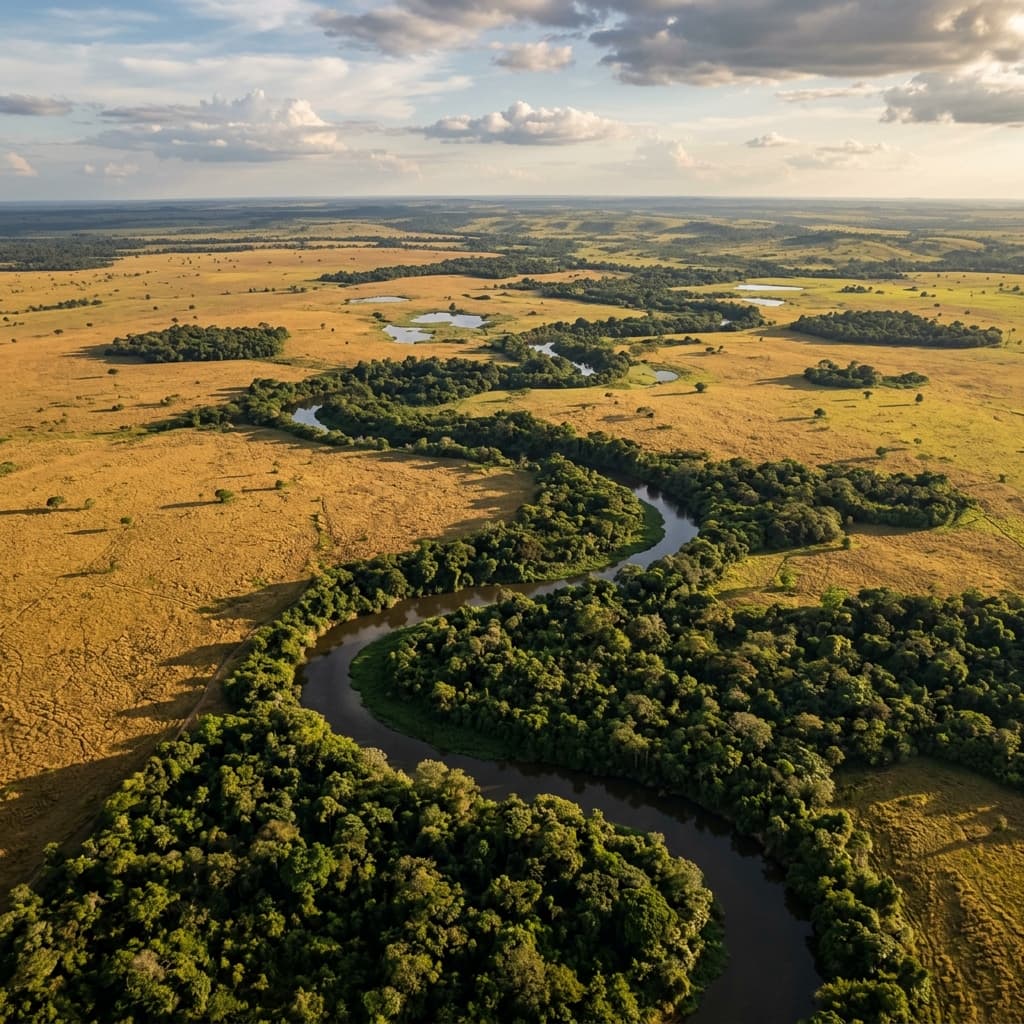
Peliwaisi REDD+ Vichada: Conservation and Life.
Excellence in every stage of the process
Our process aligns with the ColCX Standard, with independent result validation. Baseline reconstruction, activity data collection, and comprehensive monitoring.
Social and Biodiversity Impact Assessment (EISB)
We guarantee a permanent 30-year positive impact through rigorous measurements of biodiversity and social well-being.
Territorial and Social Diagnosis
Evaluation of conservation status and technical feasibility aligned with the selected standard.
Project Design
Elaboration of the PdD (Project Design Document) and Monitoring Reports.
Monitoring, Reporting, and Verification MRV
Continuous tracking of reductions and co-benefits.
Measurement and/or verification
Audit by the validation body (OVV) accredited by ONAC.
Registration and Certification
Registration in the independent certification system ColCX.
Credit Issuance
Generation and transfer of carbon certificates (VCCs) in the official registry.
Registration and Certification ColCX
Our climate assets are registered and certified according to the ColCX program, guaranteeing data immutability, traceability and compliance with the current REDD+ COLCX methodology, aligned with the ISO 14064 family of standards.
Visit ColCX Registry
High Integrity Carbon Credit Issuance
Traceable, verifiable, and eligible climate assets for national and international markets
Our carbon credits certified under the COLCX standard have been structured according to criteria of environmental integrity, legal robustness, and regulatory eligibility, allowing their use in corporate decarbonization strategies, tax compliance in Colombia, and international sustainability, investment, and climate management schemes.
Climate Change Adaptation (Objective 2 — EU Taxonomy)
Systematic monitoring and mitigation of physical climate risks in the Amazon
We constantly evaluate the physical climate variables of the territories to mitigate ecosystem threats. The conserved primary forest acts as a temperature regulator and natural protective barrier against critical threats:
Forest Fires
Early warning systems based on satellite sensors and community control brigades.
Extreme Droughts
Conservation of the primary forest canopy that retains moisture and prevents soil degradation.
Floods
Natural regulation of surface water flow through the density of forest biomass.
Rainfall Alterations
Local microclimatic stabilization by protecting the evapotranspiration cycles of the Amazon.
Water Resources Protection (Objective 3 — EU Taxonomy)
Conservation and governance of the territories' hydrographic basins
Our projects protect the natural drainage network of the Amazon, mapping strategic basins and tributaries. This guarantees the permanence of essential hydrological ecosystem services:
Hydrological Regulation
Maintenance of constant water flow in low-mountain rivers and the Amazon plain.
Sedimentation Control
Native forest roots prevent bank erosion and tributary sedimentation.
Aquatic Microclimate
Continuous forest cover protects water temperature and favors aquatic biota.
“The conservation of 256,244 Hectares of forest in the basins of the Arará and Bacatí rivers protects the regional hydrological cycle and guarantees water availability for 16 indigenous communities.”
- Specific names of protected hydrographic basins and rivers per project.
- Number of local communities and families depending on these basins.
- Available hydrological studies and water quality/availability records.
Impact beyond carbon
Social Wellbeing
Economic empowerment and territorial governance.
Biodiversity
Protection of key species and ecosystem connectivity.
No Net Loss
We guarantee the principle of No Net Loss of Biodiversity under Objective 6, ensuring conservation activities preserve ecosystem integrity.
Scientific Monitoring
Systematic monitoring of species using camera traps and land transects, with geographical overlap analysis with SINAP protected areas.
Biodiversity Baseline
We include focal species distribution maps and detailed biodiversity baselines per project to certify and verify actual impact.